

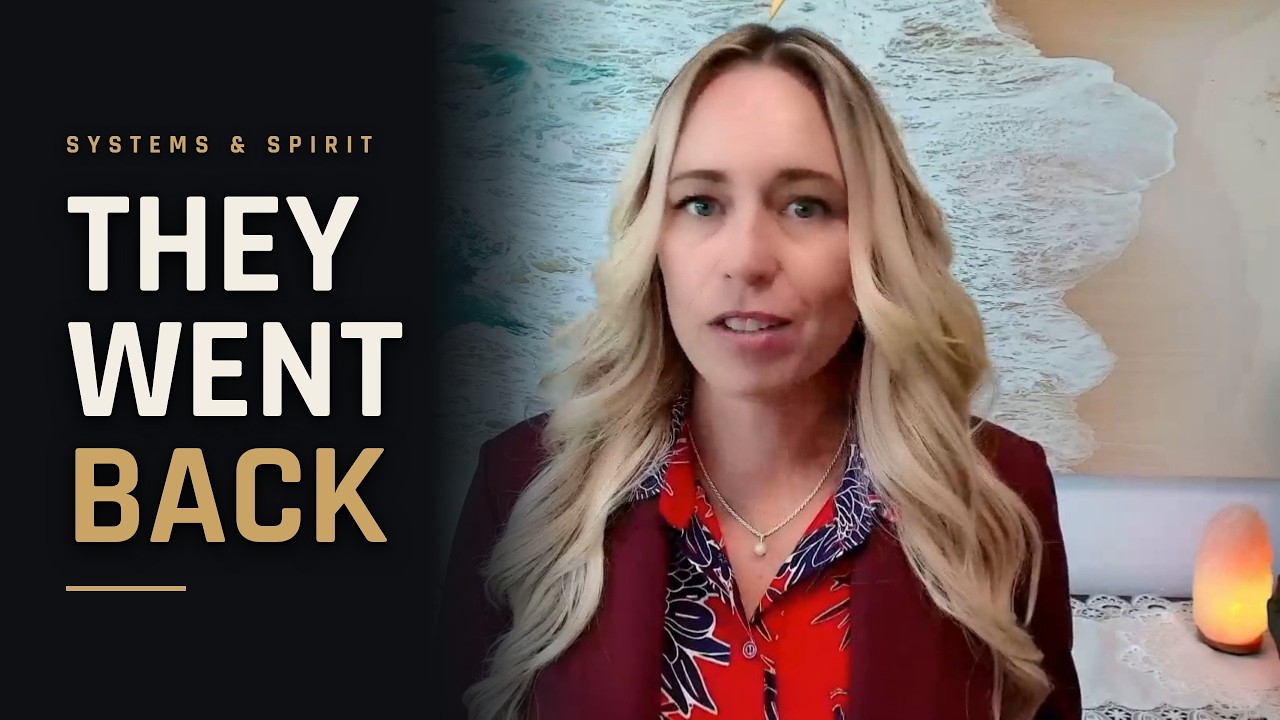
Why we go back to old habits, even when help is right there
We go back to old habits because the mind goes looking for what is familiar before it asks whether familiar is good for us. Information rarely beats that pull. For a leader, that means a better resource won't change what people do. Interrupting the old route will, and so will living the new one where people can see it.
Most of my calls as a deputy were domestic violence. Many of them were repeat customers. Same address, same people, same conversation.
For years I read those calls wrong, and I think leaders read their own teams the same way.
A whole way out, on the table
You end the immediate threat first. Usually one person goes to jail and the victim stays behind, and then you sit down with them and help them calm down. If a victim's advocate could get to us, they came out. If not, we did that job ourselves.
A few pages of questions. What's your environment like? How are you sleeping? How are you doing in your body, in your head, and with the people around you?
And then you hand them everything you've got. The pamphlets, a safe house, a ride tonight to any family or any safe person they can think of, and in the worst cases, resources at the federal level. A whole way out, right there in front of them.
And then the radio sends you back to that address.
The reasons were always some version of the same few. I can't leave. I have work. This is my home. We have kids. I love them.
For a long time, I heard those as excuses. And it was heartbreaking, because you had just handed someone a way out, and they put it down.
What nobody warns you about is what that does to you. After enough of those calls, you stop trying to convince anybody. You still care, and you still do every step. You just do it without the charge you started with. You don't lose compassion. You go numb, and you go through the process.
It was never about the pamphlet
What I understand now took me years of studying how the mind and the body work, and a lot of it came through Dr. Joe Dispenza's teachings.
We are creatures of habit. The mind goes looking for what's familiar, and it does not stop first to ask whether familiar is good for you, or healthy for you, or safe for you. Familiar wins because it's familiar.
So maybe those people saw every red flag. Maybe they saw them better than I did, and there was still too much pulling them back to what they knew.
I want to be very clear here, because this is the easy part to hear wrong. I am not saying anyone chose harm, and I'm not grading anyone who went back. I'm saying the pull toward the familiar is stronger than information, stronger than good advice, and stronger than a deputy standing in your kitchen at midnight.
If it can beat all of that, it can beat your onboarding deck.
Your version of the pamphlet
If you lead people, you have a pamphlet. The coaching budget. The open door. The employee assistance line. The leadership program you paid for that hardly anyone used.
You hand people a way out of the old pattern, and on Monday they go back to the old pattern, and you start wondering what's wrong with them.
Probably nothing. They went back to the same address.
I'll include myself, because I do this too. I know exactly what's healthy for me. Some days I don't choose it. The knowing was never the hard part.
The usual move, when people don't take what you handed them, is to make a stronger case. A better resource. A more urgent meeting. One more conversation where you explain it again, with feeling. I did that on those calls for a long time.
You can't argue someone out of the familiar. You mostly teach them to nod.
What I came to, and I came to it the hard way, is that I can't change people. The only person I can change is me. So the best thing I can do is be well, for my own sake, and let people see it. Healthy, steady, doing it myself rather than prescribing it. When you live that way in front of people, it does more than another pamphlet ever did.
It's part of why I host the show instead of chasing anybody. I put the information out there, and the people who are ready pick it up.
When the one walking back is you
Two small moves, and the first one is most of the work.
First, catch it. Some people say a word in their head the second they notice themselves heading for the old route. Change, change, change. Or cancel, cancel, cancel. It sounds silly. It interrupts the autopilot, and that's the point.
Second, change the environment. Move the furniture. I'm serious, move the couch. Do the thing you always do at a different time of day. Take a different way in. Your brain is very, very good at finding the familiar. Give it enough that's unfamiliar, often enough, and it loses the trail.
Be careful with that second one, because there's a way to get it wrong. Moving the couch is not the change. It stops the old route from running on its own long enough for you to choose something else, and you still have to choose.
The same goes for the people you lead. You can rearrange the room for your whole team. You can't walk anyone out the door.
For a long time I thought my job on those calls was to convince people. What I know now is that I had handed them the information, and the choosing was always going to be theirs. Same as it is for you, and same as it is for me.
So I'll leave you with one question. What's the address you keep going back to?
The video
I made a video about this, including the moment in it I'd most want a leader to hear.
Watch the video: https://youtu.be/lIGP0No3aR8
The essay also goes out on Substack on the 1st of each month. Subscribe free: drivenlivin.substack.com/subscribe
If you are in an unsafe relationship, the National Domestic Violence Hotline is 1-800-799-7233, or thehotline.org.


FOLLOW US


COMPANY
CUSTOMER CARE
LEGAL
Copyright 2026. Driven Livin' LLC. All Rights Reserved.